
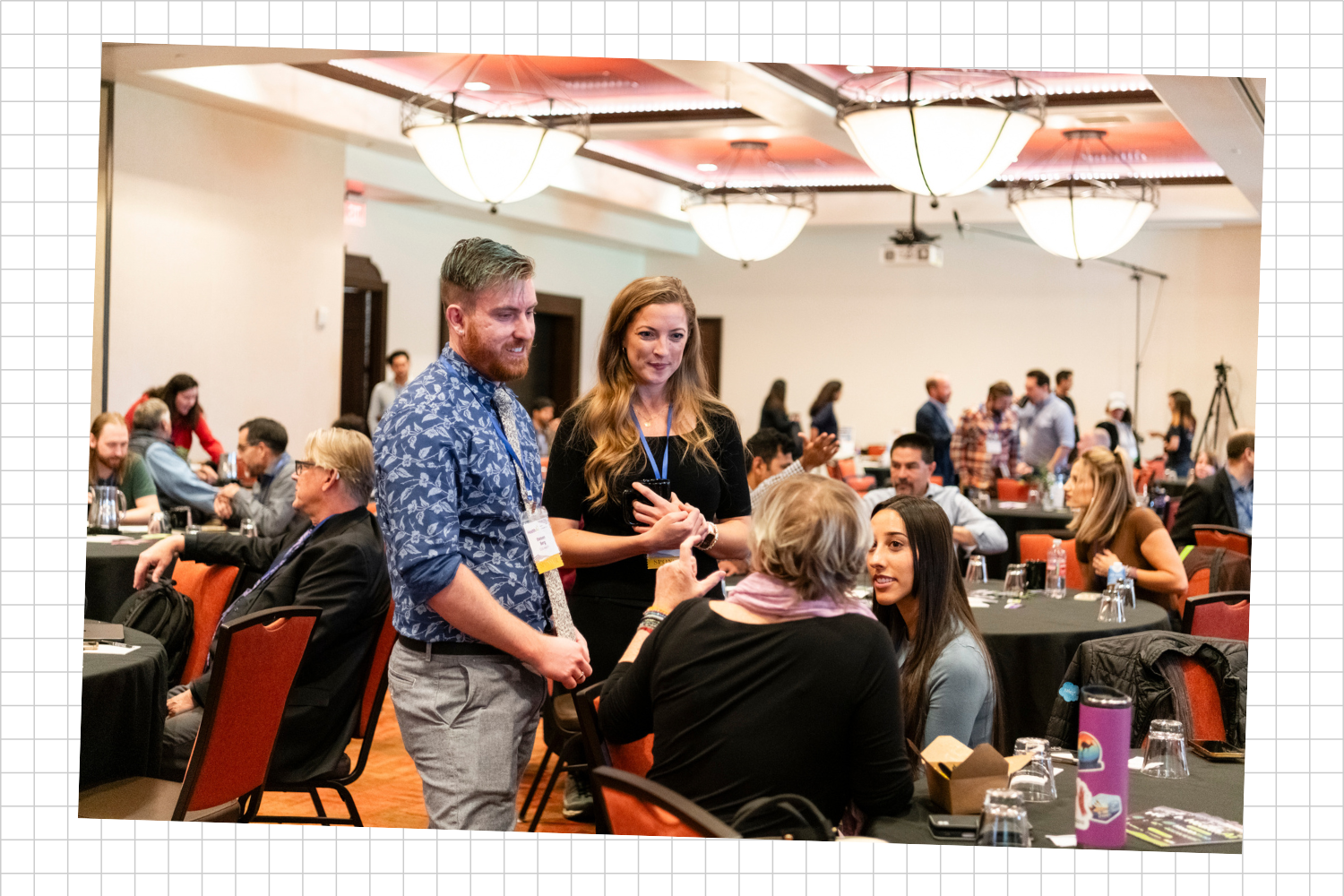
From Healthcare Priorities to Real-World Validation
Health ImpACT connects pilot-ready healthtech companies with New Mexico healthcare organizations for structured, time-bound evaluations—including solutions that are FDA-cleared as well as those that do not require FDA clearance.
This program is designed for software, data, and workflow solutions that can be deployed without FDA approval.
What is Health ImpACT
Health ImpACT is a structured evaluation and pilot challenge that helps healthcare teams test new tools responsibly—without turning clinical operations into an experiment.
HealthInno serves as a neutral convener and coordinator, bringing healthcare leaders and companies together to:
align on priorities
confirm readiness and feasibility
support a low-burden evaluation plan with clear success measures and a clear stop option
Startup Companies
If you’re building a pilot-ready Health Tech solution that is FDA-cleared or does not require FDA clearance, and you want real-world validation in live healthcare settings, Health ImpACT may be a fit.
✔ Structured, time-bound evaluations (often 1–3 months)
✔ Real healthcare environments (not demos)
✔ Clear scope, success metrics, and stop points
✖ No guaranteed sales or procurement
✖ Not for companies actively seeking FDA clearance/approval
✖ Not for FDA-regulated devices, diagnostics, or therapeutics that are not yet cleared
Upload your pitch deck to be considered as healthcare priorities and Challenge Themes are announced.
Who This Is For (and Who It’s Not)
A Good Fit If You Are:
Pilot-ready with a product that can be deployed now
Building something that can be deployed and show value in 1–3 months—without relying on FDA clearance/approval or clinical trials
Able to run a structured, time-bound evaluation with clear scope and success metrics
Ready to work in real clinical operations (not just demos)
Open to learning—no guaranteed sales or procurement
You do not need to be based in New Mexico.
Not a Fit If You Are:
Building an FDA-regulated device, diagnostic, or therapeutic that is not yet cleared
Currently pursuing FDA clearance/approval (in process)
Dependent on clinical trials or regulatory clearance to demonstrate value
Pre-product or concept-only
Looking for guaranteed customers or fast procurement
What We Mean by “Real-World Validation”
A Health ImpACT evaluation is a time-bound, scoped deployment inside a real healthcare environment (a clinic, department, or operational workflow).
Evaluations are designed to:
test feasibility in real conditions
measure outcomes that matter to healthcare teams (quality, access, capacity, burden, operations)
support a clear next decision: continue, scale, revise, or stop.

How the Process Works
A structured process that connects priority needs to pre-screened solutions.
01
Priorities defined by NM healthcare
Healthcare organizations identify shared clinical and operational challenges.
02
Submission & review
Companies submit applications, HealthInno reviews for readiness, feasibility, and alignment.
03
Innovation Spotlights
Selected companies are shared with healthcare decision-makers for feedback and discussion.
04
Structured evaluation
Aligned partners move into a scoped, time-bound evaluation with coordination support.
Health Tech Pilots in Practice: Buyer Priorities and Pilot Pathways
What does it take for a promising health technology to move into a real healthcare setting?
In this webinar, HealthInno, Digital Health Hub Foundation, and Builders VC explore how healthcare organizations identify priority challenges, evaluate emerging technologies, and determine when a structured pilot makes sense. The conversation covers buyer priorities, workflow fit, implementation readiness, measurable outcomes, and what healthcare leaders need to see before committing time and resources to a new tool.
Health Tech Categories We Are Looking For
Health ImpACT is problem-driven.
Focus areas may include:
-
What this refers to
Digital health & tech-enabled tools that help extend care beyond traditional settings—supporting virtual-first workflows, ongoing support, and reliable care across distance and time.
Typically supports
Access expansion, continuity of care, home-based care, specialty reach, and patient self-management.
What this looks like in practiceVirtual care workflows with escalation, follow-up, and care team routing
Remote support for chronic care, rehab, and recovery outside the hospital
Patient-facing tools that help people understand trends and manage goals over time
What it is not
Standalone video visits, basic portals, or tools that don’t connect to real care workflows. -
What this refers to
AI-enabled tool and data systems that connect care activity, data, and workflows across settings—so teams can act on real-time signals, route work intelligently, and reduce administrative friction inside daily operations.
Typically supports
Transitions of care, cross-system referrals, integrated care, clinician time savings, burnout reduction, cycle-time improvement, and closing care gaps.What this looks like in practice
Real-time signals that trigger follow-ups and handoffs (discharge, missed visit, care gap)
Constraint-aware routing based on urgency, capacity, and available services
Documentation and task support that drafts notes and surfaces action items
Automation for intake, referral prep, prior auth, and handoffs—with human approval
Forecasting and scheduling that adapts to demand and capacity shifts
Systems that coordinate care across teams and sites—tracking what’s happening, anticipating what’s next, and routing work so patients don’t get lost between
What it is not
Data integration alone or generic task trackers that don’t fit real workflows. -
What this refers to
Smart sensing & device-enabled approaches (i.e. wearables and lightweight sensors) that capture health signals through wearables or lightweight sensors—and turn them into useful insights over time for both care teams and patients.Typically supports
Rehab and recovery, movement/neuro support, safety monitoring, longitudinal engagement, and continuity across settings.
What this looks like in practiceNext-gen wearables that track fine motor, gait, or tremor change (e.g., a sensor-enabled glove concept)
Low-friction sensing that supports safety, recovery, and daily function outside clinical settings
Patient-facing insights that help people spot change earlier and manage their own goals
Signal summaries that stay useful even with limited connectivity
What it is not
Standalone consumer gadgets, or devices positioned as definitive clinical tests without appropriate oversight. -
What this refers to
AR/VR tools that strengthen training and remote support—so teams can build skills faster and extend specialty support without always needing someone on-site.What this looks like in practice
Simulation training for high-risk workflows without disrupting clinic operations
AR-guided support for procedures or equipment setup, with real-time remote expert backup
Immersive rehab or therapy support that adapts as patients progress over time
Typically supports
Workforce training, remote specialty support, care standardization, rehab, and patient education across distributed settings.What it is not
One-off VR experiences, marketing demos, or entertainment-first tools that don’t integrate with care pathways or staff workflows. -
What this refers to
Advanced modeling and simulation that helps leaders test decisions before rollout—so programs, pathways, and operations improve with fewer unintended consequences.Typically supports
Population health strategy, pathway design, care management programs, capacity planning, and performance improvement.What this looks like in practice
Digital twin / “what-if” simulation to test changes in access, capacity, and care delivery
Scenario modeling for prevention programs, outreach strategies, and care management approaches
Pathway modeling across populations (who benefits from what next, and when)
What it is not
Static dashboards, retrospective reporting only, or analytics that can’t be tested in a small, time-bound pilot. -
What this refers to
Applied next-generation computing for complex health system decisions—when the number of variables, constraints, and tradeoffs makes standard approaches too slow or too simplified.Typically supports
Precision medicine, population health strategy, care pathway design, care management programs, access planning, capacity optimization, and system-level performance improvement.
This includes high-performance computing (HPC) today, quantum-inspired methods in practice, and quantum-ready approaches as the field matures.What this looks like in practice
Modeling and optimizing precision medicine treatment pathways across populations (who benefits from what next, and when)
“What-if” simulation for prevention programs, capacity shifts, and care delivery changes before rollout
Complex planning like access, scheduling, routing, and resource allocation across distributed settings
Finding patterns in large, messy real-world health data to improve stratification, diagnostics, and outreach at scale
What it is not
A “quantum computer product,” routine reporting dashboards, or diagnostic tools marketed for individual patient decisions without appropriate validation.
What Submitting Means
Submitting your information helps us assess fit as Health ImpACT Challenge Themes are reviewed.
Submission does not guarantee selection
Selection does not guarantee an evaluation or pilot
Some solutions may be considered for learning or visibility opportunities even without a pilot
Ready to Share Your Information?
Upload Your Pitch Deck
Fill out the following form and upload a current pitch deck (PDF preferred) so we can understand your solution, readiness, and potential fit.