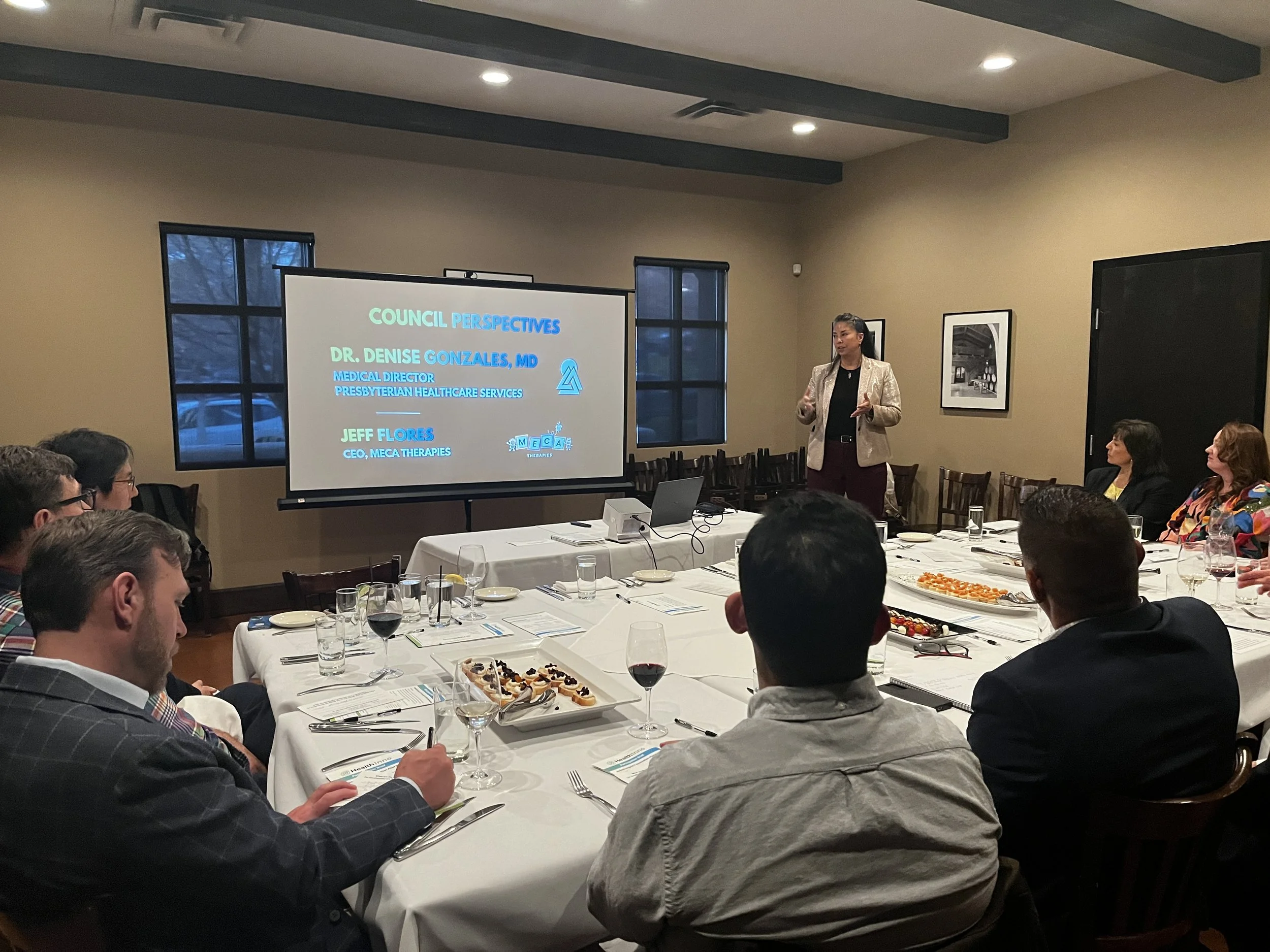
New Mexico healthcare leaders are naming where they want support right now.
HealthInno is working with health systems, clinics, payers, and public-sector partners across the state to surface shared priorities—and use them to guide how startup technologies are evaluated and piloted.
These priorities drive what we look for, who we engage, and which pilots move forward.
Current NM healthcare priorities identified
Patient access and care navigation
Getting in the door still takes too much work.
Leaders are pointing to scheduling friction, missed appointments, referral breakdowns, and challenges routing patients to the right level of care.
Where strong-fit companies tend to focus:
Triage and care routing
Appointment matching and scheduling
Referral coordination
No-show reduction
Transportation and access support
Follow-up and continuity workflows
Medicaid and public funding capture
Some organizations are delivering critical services without strong reimbursement pathways.
Leaders are looking for clearer ways to support Medicaid billing, eligibility, and sustainable funding models.
Where strong-fit companies tend to focus:
Medicaid billing workflows
Eligibility and documentation support
Reimbursement optimization
Public health funding infrastructure
Updated as new priorities come in
Workforce capacity and administrative burden
Less paperwork. More capacity.
Teams are looking for ways to return time to staff, reduce documentation burden, and make daily operations run with less friction.
Where strong-fit companies tend to focus:
Documentation support
Workflow automation
Intake and scheduling support
Task routing and coordination
Prior auth and admin workflows
Workforce training and support tools
Healthcare system coordination across New Mexico
Too much work still depends on disconnected systems and manual handoffs.
Leaders are naming the need for better coordination across organizations, especially in rural and community-based settings.
Where strong-fit companies tend to focus:
Transitions of care
Referral visibility and tracking
Interoperability and data-sharing
Cross-site coordination
Real-time operational signals and routing
Chronic and behavioral health support between visits
Time between visits matters.
Healthcare teams want better ways to support patients outside the clinic, especially in chronic disease and behavioral health.
Where strong-fit companies tend to focus:
Remote monitoring and engagement
Recovery and behavioral health support
Patient-facing tools for ongoing care
Longitudinal tracking and follow-up
Home-based care workflows
Healthcare Leaders
Want to share one of your priorities?
Email HealthInno your priority and lets us present you innovative solutions for a potential pilot.
Where these challenges show up
01
Health Systems and Hospitals
02
Clinics and Physician Groups
05
Rural and Frontier Care Settings
03
Health Plans and Payers
06
Tribal Health Organizations
04
Behavioral Health Providers
07
Home-based and Community Care
What is ACT?
ACT is Advanced Computing Technology—it’s a state priority.
For us, it means new technology that is clinically grounded, operationally realistic, and has the potential to transform care delivery for New Mexico communities in new ways.
Select each example to see what that could look like.
-
What this refers to
Digital health & tech-enabled tools that help extend care beyond traditional settings—supporting virtual-first workflows, ongoing support, and reliable care across distance and time.Typically supports
Access expansion, continuity of care, home-based care, specialty reach, and patient self-management.What this looks like in practice
Virtual care workflows with escalation, follow-up, and care team routing
Remote support for chronic care, rehab, and recovery outside the hospital
Patient-facing tools that help people understand trends and manage goals over time
What it is not
Standalone video visits, basic portals, or tools that don’t connect to real care workflows. -
What this refers to
AI-enabled tool and data systems that connect care activity, data, and workflows across settings—so teams can act on real-time signals, route work intelligently, and reduce administrative friction inside daily operations.Typically supports
Transitions of care, cross-system referrals, integrated care, clinician time savings, burnout reduction, cycle-time improvement, and closing care gaps.What this looks like in practice
Real-time signals that trigger follow-ups and handoffs (discharge, missed visit, care gap)
Constraint-aware routing based on urgency, capacity, and available services
Documentation and task support that drafts notes and surfaces action items
Automation for intake, referral prep, prior auth, and handoffs—with human approval
Forecasting and scheduling that adapts to demand and capacity shifts
Systems that coordinate care across teams and sites—tracking what’s happening, anticipating what’s next, and routing work so patients don’t get lost between
What it is not
Data integration alone or generic task trackers that don’t fit real workflows. -
What this refers to
Smart sensing & device-enabled approaches that capture health signals through wearables or lightweight sensors—and turn them into useful insights over time for both care teams and patients.Typically supports
Rehab and recovery, movement/neuro support, safety monitoring, longitudinal engagement, and continuity across settings.What this looks like in practice
Next-gen wearables that track fine motor, gait, or tremor change (e.g., a sensor-enabled glove concept)
Low-friction sensing that supports safety, recovery, and daily function outside clinical settings
Patient-facing insights that help people spot change earlier and manage their own goals
Signal summaries that stay useful even with limited connectivity
What it is not
Standalone consumer gadgets, or devices positioned as definitive clinical tests without appropriate oversight. -
What this refers to
Immersive and spatial approaches or computing tools that strengthen training, remote support, and care delivery—especially when specialty access or staffing make in-person support harder.Typically supports
Workforce training, remote specialty support, care standardization, rehab, and patient education across distributed settings.What this looks like in practice
Simulation training for high-risk workflows without disrupting clinic operations
AR-guided support for complex procedures or equipment setup, with real-time remote expert backup
Immersive rehab or therapy support that adapts as patients progress over time
What it is not
One-off VR experiences, marketing demos, or entertainment-first tools that don’t integrate with care pathways or staff workflows. -
What this refers to
Advanced modeling and simulation that helps leaders test decisions before rollout—so programs, pathways, and operations improve with fewer unintended consequences.Typically supports
Population health strategy, pathway design, care management programs, capacity planning, and performance improvement.What this looks like in practice
Digital twin / “what-if” simulation to test changes in access, capacity, and care delivery
Scenario modeling for prevention programs, outreach strategies, and care management approaches
Pathway modeling across populations (who benefits from what next, and when)
What it is not
Static dashboards, retrospective reporting only, or analytics that can’t be tested in a small, time-bound pilot. -
What this refers to
Applied next-generation computing for complex health system decisions—when the number of variables, constraints, and tradeoffs makes standard approaches too slow or too simplified.Typically supports
Precision medicine, population health strategy, care pathway design, care management programs, access planning, capacity optimization, and system-level performance improvement.This includes high-performance computing (HPC) today, quantum-inspired methods in practice, and quantum-ready approaches as the field matures.
What this looks like in practice
Modeling and optimizing precision medicine treatment pathways across populations (who benefits from what next, and when)
“What-if” simulation for prevention programs, capacity shifts, and care delivery changes before rollout
Complex planning like access, scheduling, routing, and resource allocation across distributed settings
Finding patterns in large, messy real-world health data to improve stratification, diagnostics, and outreach at scale
What it is not
A “quantum computer product,” routine reporting dashboards, or diagnostic tools marketed for individual patient decisions without appropriate validation.
Ready to Get Involved?

Health ImpACT is a collaborative effort, with each partner playing a key role.
Stay tuned as this list grows.
IN PARTNERSHIP WITH